
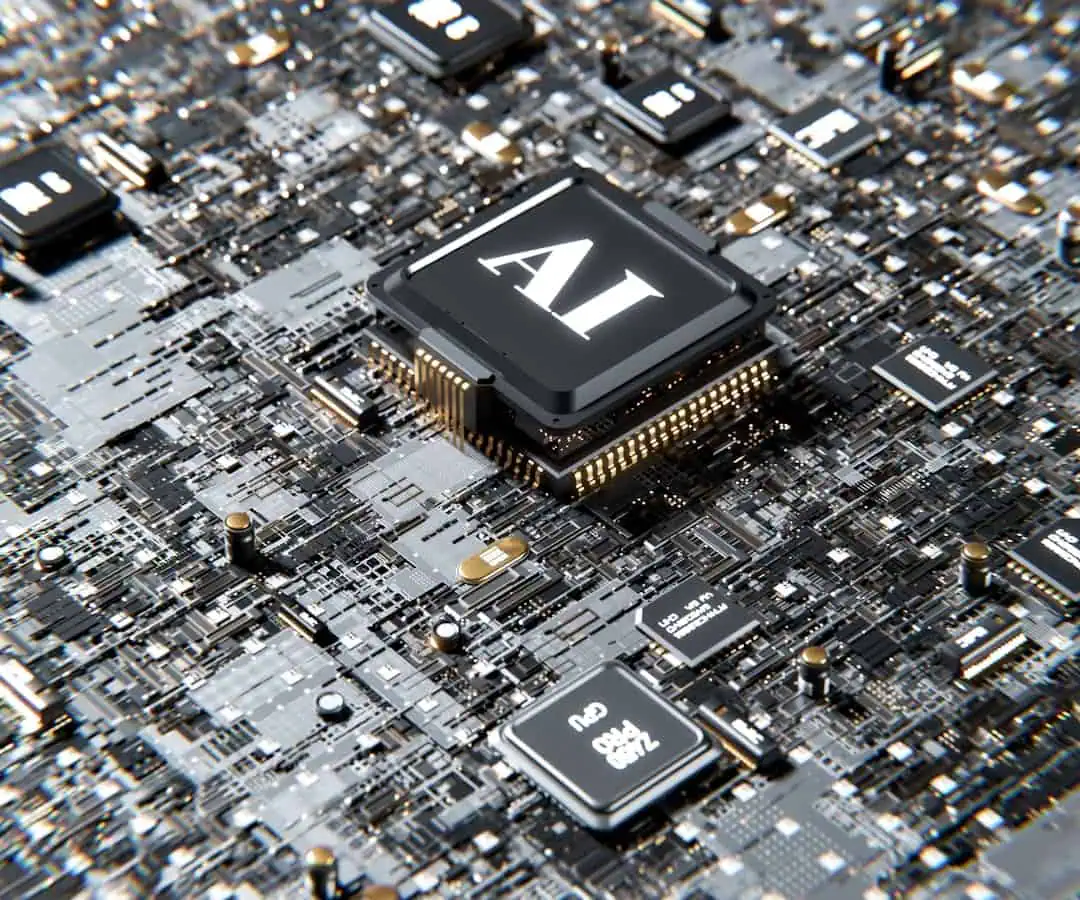
Generative AI: Revolutionizing 2025 with Innovative Applications
Generative AI is transforming the world of technology and innovation. Generative AI refers to algorithms that create original content, such as text, images, or music. The algorithms learn from an existing, older data set to create outputs that resemble reality.
Generative AI is powered by machine learning with neural networks, especially deep learning. The generative part is what is getting many excited across a spectrum of industries, forms of innovation, and new disruptive business models. The applications and ways of using generative AI appear to be endless. From health care to entertainment to so much more, we are just scratching the surface.
The potential of AI tools like ChatGPT (GPT-3) and DALL-E are tremendous examples of generative AI at work in building content and design. It is also expanding awareness and contributing to new avenues of development in health care, like drug discovery and personalized medicine.
Generative AI is not simply automation, but an incredible opportunity to amplify creativity and increase productivity through the unique value proposition of generating original content. The technology is transforming and evolving thinking in a variety of industries with a wealth of opportunities in rethinking how things are done and how productive they can be.
What is Generative AI? An Overview
Generative AI is a class of AI, rather than AI that analyzes data. It is a class of AI that generates data for you. The main reason Generative AI can do this is because it learns from existing data sets and learns to recognize the patterns in the data.
On a high level, Generative AI is still learning a representation and recognizing data with high complexity. The model references inputted data and generates output that is similar but not the same. The model is capable of this across a large surface area; e.g. text, images, audio etc.
Generative AI is revolutionary because of the different methods used to create the models. There are different methods with different methodologies used by the model, such as deep learning and neural networks. These methods allow the model to learn and understand complex details and nuances.
Some popular models include:
- GPT-3; A text driven model that generates human-like text
- DALL-E; A model that creates representations of images produced only from text descriptions
- DeepMind’s AlphaFold; A model that predict proteins change in structure to the highest accuracy
Each tool above represents a part of the potential of what Generative AI can do. In summary, they show how we can create in AI products of things that would normally instead be unimaginable.
How Generative AI Works: Key Technologies and Models
Generative AI works through a series of emerging technologies. Collectively, they are contributing to the complex task of content generation through deep learning, neural networks, and distinct algorithmic frameworks.
Cyber models assess huge amounts of datasets and learn the structure and patterns of the datasets. Once they contribute this understanding of the datasets they can produce new and similar but original outputs. Below are some of the leading models and technologies:
- Deep Learning and Neural Networks: Core of processing and learning from data.
- Generative Adversarial Networks (GANs): Are two networks which will improve the quality of the outputs.
AI tools utilize these technologies for various uses. From creating artwork to generating models in science, the sky is the limit. This section expands on some of the key technologies.
Furthermore, understanding these technologies is habitual for professionals in AI. It is important for the design and development of viable AI. Through proper knowledge of the capabilities of each model, intelligent models can be utilized strategically.
Each of the models can exhibit many singular characteristics and use cases. For example, GANs are widely known for their ability to generate realistic images. Meanwhile, transformers are the current behavioral leaders in natural language processing (NLP).
By discussing these models, one can see how they can be applied in practical terms. It can also show how significantly they are changing fields. AI models have a higher degree of evolution to come. Development trends and applications can only grow more significant.
In the next sections, we will discuss each technology in finer detail. This will help illustrate how they can help grow Generative AI as a whole. This knowledge will be instrumental when we look forward to the year 2025.
Deep Learning and Neural Networks
Deep learning is the foundation of many functions of AI. Deep learning consists of numerous layers of neurons to process systems in sophisticated ways. This is most similar to ways in which the brain works and means that AI can replicate human-like processes.
Neural networks or essentially an array of algorithms, learn patterns within data in dynamic ways. They consist of multiple layers of neurons allowing you to better understand the data and being able to produce data. It is important to understand
the key components of deep learning such as:
- Neurons: The basic processing unit of neural networks, or the “black boxes” of algorithms.
- Layers: Many neurons stacked up to form a layer.
- Connections: Nodes that carry signals to each other and are important for learning across the network.
Deep Learning can help AI models embed their outputs, and improve their generative capabilities over time through their network’s learning process. With increase amounts of data to learn by, connections made through networks learn how to produce its outputs better over time, and this concept is critical to growth of the Generative AI market.
Top Applications of Generative AI in 2025
Generative AI remains a juggernaut across various domains. Its various applications revolutionize traditional industries by providing innovative solutions. Content creation, healthcare, design and the arts, and business are particular areas of significant influence.
AI-based content creation has changed the game, changing media dynamics in ways never imagined. In only a few seconds, AI tools create relevant content that is personalized, reliable, and of outstanding quality, available in record time— and at very low cost to the publisher and media organization.
AI in healthcare is creating a revolution in drug discovery and diagnostics. Generative AI and machine learning are capable of analyzing billions of sophisticated medical datasets to customize a patient’s care plan for more effective and efficient patient care models.
The collective power of Generative AI in design, art, and entertainment cannot be understated. Creatives are able to push their boundaries into entirely new and unique art forms, especially since the AI tool can offer greater customization and personalization opportunities to consumers.
Generative AI is also making major contributions to business and finance applications by enhancing operational workflows, ranging from routine automation to predictive modeling. Chiefly, Generative AI can improve managerial decision-making, competitiveness, and profitability.
Notable applications of Generative AI across industries include:
- Personalized tailored content creation in an efficient manner
- Personalized healthcare solutions
- Common business processes and operations
Generative AI is unique with its ability to morph into what users want or need it to be. It is democratizing creative spaces and technical spaces due to its approach to lowering the barrier of entry to innovation and creativity. This means that more users can think creatively and innovatively.
The use of AI in conjunction with legacy systems enhances productivity by allowing companies to focus on their strategic goals and minimize time in mundane areas of work. The shift from mundane areas of work to strategic goals results in better use of company resources and greater employee experience.
Moving forward into 2025 we are excited to see even more exciting applications. The more applications we see, the more our relationship with technology will continue to be shaped. As we see AI evolve new trends will come out of using these capabilities and new frameworks will form in our AI world.
We will now dive deeper into each application, in order to uncover the potentials:
Content Creation and Media
Generative Artificial Intelligence is transforming content development. It opens opportunities that change media creation. The old barriers to creating media are disappearing, opening up means of telling stories.
AI models such as GPT-3 can produce articles, scripts, and poetry. They can replicate various human writing styles, but they can also change adaptively. Media companies are using AI to personalize content for niche audiences.
Some main advantages are:
- Producing a large quantity of content very quickly
- Recommending personalized content
- Producing media at an affordable cost

AI takes information from an array of sources and is capable of producing articles and blogs in seconds. The ability for AI to analyze data and develop a profound understanding of the insight is groundbreaking! For journalists and marketers alike, the speed of the reports that can be produced by AI brings significant opportunity and value for their story-telling objective.
Any task assigned to AI that involves creating content frees the human creator to engage in more advanced strategic work. The partnership of AI and human expertise will improve the vibrancy and diversity of media ecosystems.
Generative AI’s influence on advertising and brands engagement will have substantial impacts on advertising effectiveness overall. Ads are now able to be more personalized and impactfully targeted through the use of the consumer insight. This altogether amounts to a higher return on investment with improved customer experiences!
Healthcare and Life Sciences
Generative AI presents revolutionary opportunities in healthcare. It contributes to identifying diseases as well as customizing treatments. By the year 2025, it will be the backbone of sophisticated health care applications.
AI models can be used to mimic biological processes for drug discovery. The goals is to increase drug development speeds while providing novel treatments. The added benefit of AI in drug discovery is the ability to accurately predict outcomes in clinical trials resulting in lower costs.
Major healthcare applications include:
- Predictive diagnostics and facilitator of personalized treatment plans
- Drug discovery and molecular research
- Improved analysis of medical imaging
Generative AI allows medical imaging to reduce unnecessary repetitive imaging to improve image quality and scan identifying characteristics in a matter of seconds. These capabilities lead to sooner diagnoses and better outcomes for patients.
AI will inform predictive analytics to develop better personalized treatment plans driven by the patient. It will be able to visualize models on an individual level and understand the patient’s genetics. Generative AI encourages a more precise preferred way of delivering the precautionary measures found in human healthcare.
Generative AI will endeavour to integrate biological data and chemical data. Researchers will integrate years of synthesized evidence to develop models of complex life systems, predict how relationships amongst life systems will work. Generative AI is likely to accelerate the interactions involved with scientific discovery including genomics and biotechnology.
Design, Art, and Entertainment
In design, art and entertainment, Generative AI is a revolutionary force in creativity. Generative AI is changing the way creators create and engage with artistic forms of expression, and it is changing the creative process in ways that unlock new potentials for artistic expression.
AI now has the ability to generate beautiful digital art, and in the process, it is challenging the boundaries of art. The creation of original visual works using descriptive text prompts is a major advancement using available tools such as DALL-E. Artists and designers are using these features to develop innovative projects.
Interesting examples of AI generated artwork include:
- Creating unique digital artwork and visuals
- Creating customizable entertainment experiences
- Enhancing animation and special effects
AI tools offer real-time customization within entertainment. Video games and movies are tailored experiences whereby audiences expect and search for customized experiences. Interactivity and experiences that adapt to user input or behaviors are possible, desirable and fun.
In art, the question of authorship and creativity arises. AI-art challenges the traditional notion of originality – can something AI-generated still be considered original? Through collaborations with AI, artists are developing some interesting new genres.
Generative AI is also revolutionizing and transforming the fashion and industrial design industries. It has the ability to make predictions about trends and design products with consideration for consumer preferences. Designers can leverage generative AI tools, both through the use of future insights and generative design processes that inform and enhance their own creative process.
Business, Finance, and Industry
Generative AI is transforming business, finance, and industry. It delivers actionable insights and optimizations for complex operations. This equates to significant efficiencies and competitive advantages.
AI models are automating previously time-consuming tasks, giving free-time back to employees. Repetitive processes, such as customer service and risk management, can now be consistently and expertly executed. These efficiencies strengthen a company’s position in any market.
Key applications include:
- Automation of routine business processes
- Financial risk analysis
- Industrial design and manufacturing optimizations
In finance, AI tools are transforming how we analyze data and predict trends. AI helps us forecast trends in the market with improved accuracy, therefore making more informed investment decisions. AI is also improving operations by automating many backend tasks.
AI is changing the supplies chain space in significant ways. Logistics, forecasting demand accurately, reducing costs, etc. AI and real-time processing of data, have exponentially improved supply chain managers ability to better align supply to demand at a low cost.
Generative AI and digitally created customer interactions are enhancing consumer experiences. AI chat bot capabilities, are acting as an additional layer of feature in receiving consumer inquiries. These more dynamic forms of customer/rband interactions are more likely to improve customer satisfaction and brand loyalty.
Leading AI Tools and Platforms in 2025
In 2025, the ecosystem of AI tools and platforms continues to evolve, Maturing AI solutions are stretching innovation and empowering businesses and individuals to completely utilize AI potential.
GPT-3 is one tool in AI that has generated a lot of excitement. GPT-3 revolutionizes text as it generates human-like text, making it difficult for the average reader to recognize that it is not human written! As a result, we will see a massive transformation in writing and content in various degrees of workflow.
DALL-E, which is the tool for generating images from text, is another tool that has generated a lot of attention. It generates images from text using an imaginary almost seamless process. This tool can provide artists and designers with unique ideas they haven’t considered or generate visuals for novel, innovative, or new concepts.
- GPT-3: for advanced text generation
- DALL-E: synthesis through images
- Midjourney: for visually stunning art

There are many AI platforms in the space that help advance machine learning projects, they also have fully comprehensive libraries to develop and deploy AI models. These platforms make AI research and application less cumbersome for machine learning developers.
On the other side of the coin, AWS and Azure are both critical players in AI deployment. They both can provide scalable infrastructure to support AI operations which means businesses can perform complex AI computations because they can integrate scalable options.
- TensorFlow and PyTorch: for machine learning development
- AWS and Azure: for scalable infrastructure.
- IBM Watson: for AI-driven analytics.
OpenAI Codex is a pioneering force in AI-driven code generation. It s upport s developers by writing code based on natural statements. It drastically speeds up software development cycles.
As these tools become even more advanced their use-cases expand. Companies in every industry will be building them into their daily processes. The realization and application of these AI based tools only shows how crucial they will be in a digital future.
Conclusion: The Road Ahead for Generative AI
Generative AI is on the cutting edge of technology. It presents us with significant opportunities for innovation and change. As we approach 2025, the impact will be even more substantial on the corporate and personal front.
We expect more effective and accessible AI tools, leading to better productivity, creativity, and problem-solving across all areas of business. The introduction of ethical frameworks will help drive this development and, we hope, use of generative AI positively.
Generative AI will evolve as possibilities re-imagine the evolution of the corporate world, and participating and being informed will be essential. Those individuals and organizations which embrace generative AI are likely to thrive in an increasingly generative AI world.


One Comment on “Generative AI: Powerful Applications, Benefits, and Future Trends in 2025”