
Table of Contents
1. Introduction to Marketing Automation Trends
Marketing has evolved into a fully automated first-class category in 2025. The early days of simple email scheduling have been replaced with an omni-channel marketing automation ecosystem of artificial intelligence continuously using marketing-informed and dependent predictive insights and customer journey orchestration!
According to HubSpot, more than 75% of companies are using marketing automation today, with adoption moving rapidly. Brands that can now use automation seem to convert 451% better at acquiring qualified leads than brands that have not invested in marketing automation and attribution early.
This guide addresses many of the marketing automation trends of 2025 and details how businesses are hosting productive conversations that spend less time, need less money, offer personalization at scale for outcomes, and turn marketing investments into impressive ROI!
2. Why Marketing Automation Matters in 2025
Marketing automation is not just more tech—it is a growth strategy. In today’s competitive environment:
- Customers expect immediate, personalized interaction.
- Businesses are running millions of touchpoints across many channel conveniences
- Manual processes are too slow to keep up
Benefits of marketing automation include:
- Efficiency—Teams no longer have to spend time doing repeated tasks.
- Scalability—One person can run campaigns for thousands of new leads.
- Higher Knowledge ROI—More personalized and more data-driven campaigns better convert.
- Better customer experience—Better touchpoints enable more timely and consistent alternative communications
External Link: Salesforce – Marketing Automation Insights
3. Top Marketing Automation Trends in 2025
The 2025 marketing automation trends include:
- AI-enabled scaling personalization
- Hyperautomation AI + RPA
- Omnichannel automated customer journeys
- Predictive analytics awareness & data-led campaigns
- Chatbots & Conversational AI
- Edge AI privacy and speed
- Sustainable & ethical automation
Every trend signifies the movement towards smarter, more efficient, customer-first marketing.
4. AI-Powered Personalization at Scale
Although personalization is crucial now, in 2025 it will be essential. No more do customers pay attention to generic announcements—they not only ignore them, but they also expect offers personalized to their interests, amount of time spent, and where they are.
Tools like Adobe Sensei and Salesforce Einstein utilize machine learning engines to examine behaviors across everything from email to social channels and the web.
Example:
Netflix employs AI-enabled personalization subscriptions that both recommend shows and facilitate watching. 80% of visual activity is driven by these personalization interactions. (Business Insider)
E-commerce stores offer recommended products as browsing is occurring; sales increase by 10% – 35% on average for every customer visit.
5. Hyperautomation in Marketing
Hyperautomation is the combination of AI, robotic process automation (RPA), machine learning automation, & analytics into connected systems.
From a marketing perspective, hyperautomation relates to:
- Automated lead scoring & nurturing.
- Campaign monitoring, optimization, and analytics as it’s happening.
- Automating workflow across CRM, email, & social tools.
Gartner recognizes hyperautomation as one of 2025’s worldwide top business trends (Gartner).
6. Omnichannel Automation & Customer Journeys
Today’s customer is not limited to one channel, they could see a Facebook ad, go to your website, get an email, and then purchase through your app.
Marketing automation trends in 2025 will allow every touchpoint of the customer’s journey to connect seamlessly together.
Example:
- A customer clicks an Instagram ad → they receive a customized email → they get a follow-up message from a chatbot → they get an SMS notification to remind them → they make a final purchase.
Companies that utilize omnichannel automation have a customer retention increase of 89% (Invesp)!
7. Predictive Analytics and Data-Driven Marketing
Predictive marketing automation leverages the power of AI to analyze one-off and ongoing customer behavior.
- E-commerce: It predicts what products a customer is most likely to purchase next.
- Finance: It predicts customer churn and sends tailored retention offers.
- SaaS: It automates upselling based upon the behavior of customer usage.
According to Statista, the global artificial intelligence market will reach $190 billion by 2025, with predictive analytics as one of the fastest-growing sectors.
8. Conversational AI and Chatbot Marketing
By 2025, chatbots will be sales reps, not just tools for support.
- 24/7 account availability.
- Lead qualification.
- Product recommendations.
- Voice assistants that are integrated with Alexa & Google.
Juniper Research forecasts chatbots will net businesses $11 billion in savings annually by 2025.
9. Edge AI in Marketing Automation
Concerns about privacy are creating a wave of Edge AI—AI that allows for the local processing of data rather than needing to use the cloud.
- Faster response times for personalizing customer experiences
- Enhanced security since data stays on devices
- Cost savings due to reduced use of the cloud
According to MarketsandMarkets, Edge AI (in both marketing and other verticals) will be a $38 billion industry by 2025
10. Ethical & Sustainable Marketing Automation
A growing number of consumers are indicating that ethics and sustainability matter to them. This marketing automation trend is contributing to marketing practices that are moving toward:
- Eco-friendly campaigns
- Transparent AI decision-making in marketing
- Not enabling manipulative personalization
Brands who adopt ethical automation are laying a foundation for trust and long-term loyalty among consumers.
11. The Future of Work & Marketing Automation Jobs
Automation is changing jobs in marketing, rather than destroying them.
Marketing is transforming jobs by replacing some positions:
- Email campaign managers → AI workflow architects
- Social media schedulers → automation strategists
According to McKinsey, 30% of jobs may be automated by 2030; however, there will be new jobs in the areas of AI marketing and automation architecture, and data strategy
12. Case Studies: Companies Winning With Marketing Automation
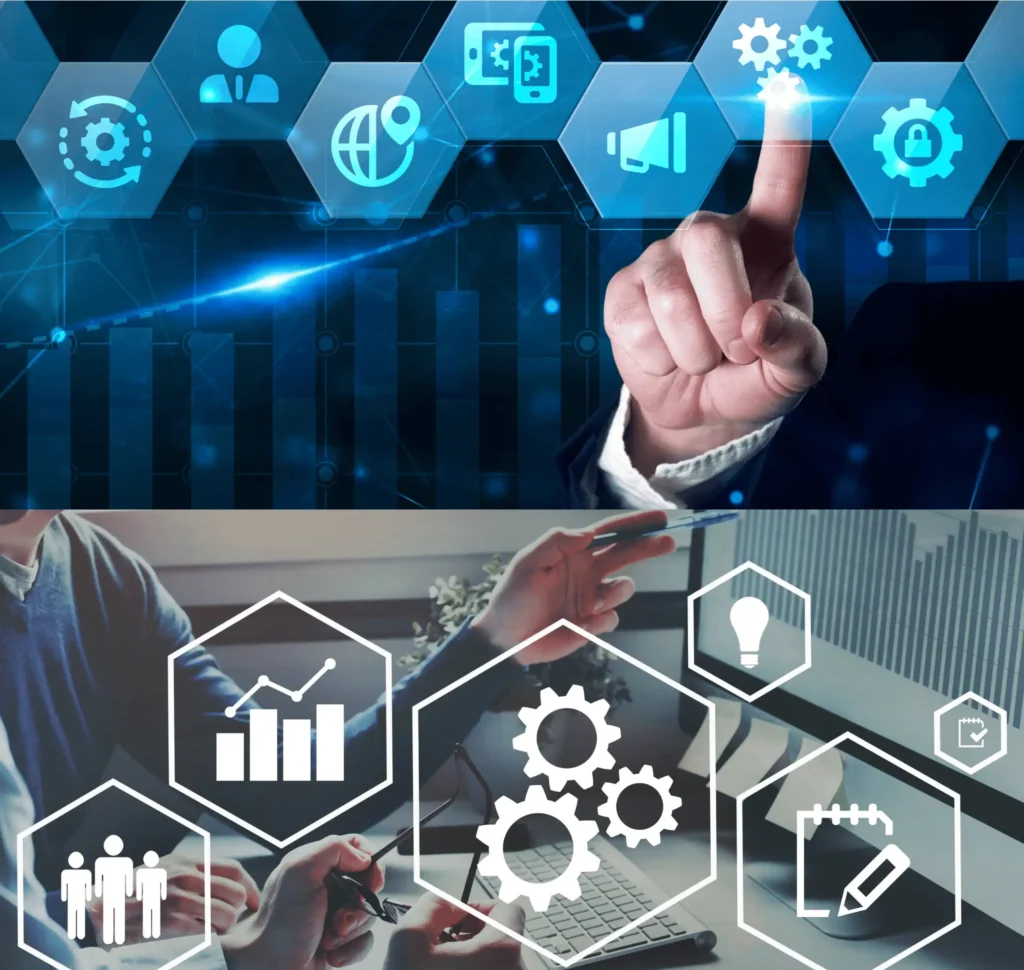
- Spotify—Spotify leverages predictive automation to recommend playlists based on listening habits.
- Amazon—Amazon utilizes automation to recommend products and automate pricing changes.
- Starbucks—Starbucks leverages an ethically infused, loyalty/sales-driven AI loyalty program, which increases sales.
These brands demonstrate that data + automation = customer loyalty + increased revenue.
13. Challenges to Adopting Marketing Automation
Although the power behind automation is impressive, businesses encounter challenges
- Data privacy compliance (GDPR, CCPA)
- Integration with outdated systems
- High-priced advanced automation platforms
- Need for a trained workforce
But the solution is that you should initially start with small amounts of automation then scale as your ROI grows.
14. Conclusion
The marketing automation trends in 2025 have taught us one truth: businesses that embody automation are going to do better than ones that ignore it.
The future is about:
- AI-powered personalization
- Hyperautomation ecosystems
- Omnichannel customer journeys
- Predictive insights
- Sustainable, ethical automation
Marketing automation isn’t replacing the human—the human is the marketing automation empowered by the automation.
Read more
Profitable Digital Products—The Ultimate Guide to Selling Online in 2025
15. FAQ
1. What are the biggest marketing automation trends in 2025?
Some of the biggest trends include AI-powered personalization, hyper-automation, omnichannel automation, predictive analytics, conversational AI, and Edge AI.
2. Why is marketing automation important in 2025?
Because it allows businesses to scale customer engagement, personalize at scale, improve return on investment while lowering manual work.
3. What industries stand to benefit the most from marketing automation?
E-commerce, SaaS, finance, healthcare, and retail benefit the most given their large customer bases and data-driven approaches.
4. Is marketing automation eliminating jobs?
No, it is redefining jobs. Although it frees up time on repetitive tasks, it is also creating new opportunities such as AI marketing strategy and automation designer.
5. What does the future look like for marketing automation beyond 2025?
There are trends toward autonomous AI systems, more ethical automation, and deeper integration of predictive analytics across different industries.



One Comment on “Marketing Automation Trends in 2025: 10 Powerful Innovations Shaping the Future”